Introduction: Talent Intelligence Function
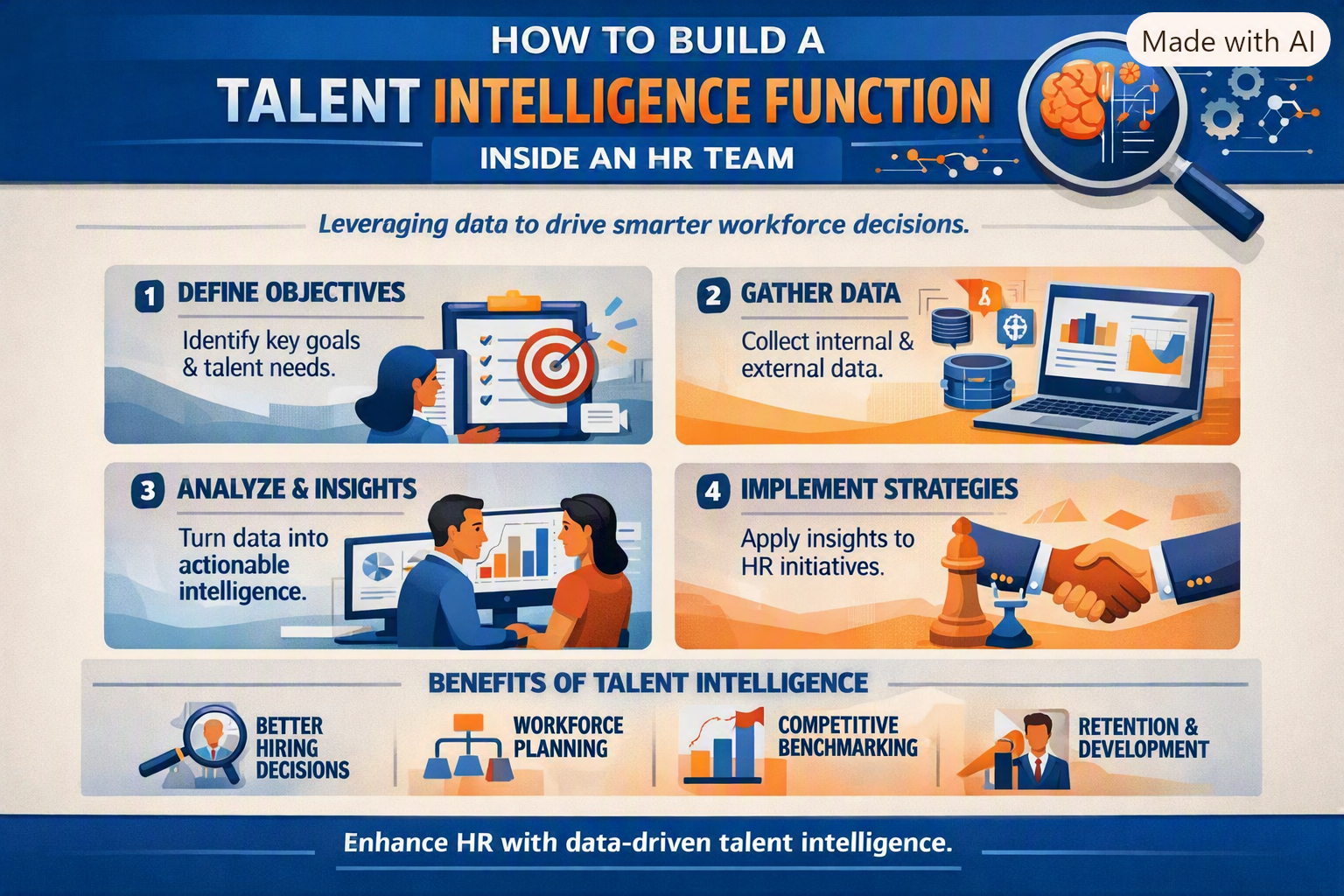
It is not enough for human resources teams to attract and retain employees in a new world. The modern HR director must also demonstrate an understanding of future skill needs, labor markets, attrition trends, and how these factors fit into the broader business plan. Creating and sustaining a talent intelligence practice is the best way to ensure that the human resources department can fulfill its growing strategic role.
“How to build a talent intelligence function inside an HR team” will discuss the fundamental principles of establishing such a practice inside the human resources department.
How to Build a Talent Intelligence Function Inside an HR Team Essay?
1. Start With Questions Your Company Needs Answers To
The most important thing to do while building a talent intelligence practice is to decide which professional questions it will answer. Different organizations have different priorities, and it is up to the HR directors to decide what these priorities are. For instance, some organizations will be more interested in knowing where to find the best-performing software engineers, and some will seek to balance attrition rates.
Regardless of the questions your business asks, a talent intelligence practice should be designed in a manner that allows it to answer these questions in sufficient detail.
2. Use Good Information
Human resource professionals can collect data from a variety of internal and external sources.
An effective talent intelligence practice will rely on the information collected from these resources to help the business make better personnel-related decisions. The key to succeeding at this step is to avoid turning the process into an endless pursuit of obtaining more and more data.
3. Make a Simple Set of the Most Important Skills
One of the central challenges an organization faces when it decides to build a talent intelligence practice is to rethink its understanding of skills. Businesses must not only identify skill sets specific to a given position but also realize what employees in that department can actually perform. After that, the human resources department should create a simple skills-based database. It will enable the business to understand which core skills it excels at and which ones it does not.
For instance, if the company realizes that it does not recruit enough data analysts, it might consider training its existing employees rather than looking to fill these vacancies.
4. Studying the External Job Market
A talent intelligence team should monitor the ever-changing talent landscape to remain aware of where qualified candidates are located, at what wages they can generally be hired, and which companies are in a position to poach skilled and experienced workers. All of these insights will allow the human resources department to shape better talent strategies.
Market intelligence is also likely to become a vital tool for analyzing the activities of one’s competitors. Information about what other organizations are doing can help human resources directors better understand changing labor trends and the likely impact these trends will have on their company.
5. Leverage Technological Tools Wisely
Technology tools such as recruitment software, human resources databases, analytic applications, and workforce planning tools can significantly enhance a talent intelligence practice. Nevertheless, it is important to remember that these technologies will only get the human resources department halfway to its destination.
At the end of the day, there still needs to be a competent and capable team of people who can evaluate the meaning of raw data.
For instance, if an organization starts receiving reports about a high attrition rate, these reports will not automatically tell the human resources directors the reason behind this trend. The attrition might be caused by low pay, poor leadership, an unsustainable work load, lack of professional growth, or superior job offers available to one’s employees.
6. Produce Fewer, Higher-Quality Reports for Senior Leadership
Human resources departments can make numerous reports regarding the talents needs of an organization. However, at the end of the day, most leaders will only review reports that concern matters directly relevant to them. Reports should be short, and they should always contain specific recommendations and action items.
Instead of telling the leadership that higher recruiting costs are a growing problem, the reports should explicitly state the reason why these costs keep growing and what the human resources team is willing to do to mitigate these costs.
Conclusion: Talent Intelligence Function
Talent intelligence helps transform human resources teams from cost centers into strategic business partners. It achieves that by taking advantage of internal employee data and external labor-market intelligence. A wise HR director will ensure that this process always stays employee-centric. The best way to start is to identify the most pressing questions an organization has concerning its current and future labor needs.
Creating detailed, nuanced reports about these needs is a good way to address them. The team should always define its priorities and leverage technology and workforce planning tools to help it reach its goals in an efficient manner. Eventually, an effective talent intelligence practice should evolve into a strategic partner that takes part in shaping and facilitating the business’s people strategy.
Ready to build a smarter, data-driven approach to talent management? Start developing your talent intelligence function by combining workforce insights, market data, and the right hiring technology. Platforms such as Best Job Tool can help HR teams connect with relevant talent and make recruitment more efficient.
Explore Best Job Tool to discover opportunities, connect with potential candidates, and take the next step toward building a more agile and future-ready workforce.

Leave a Reply