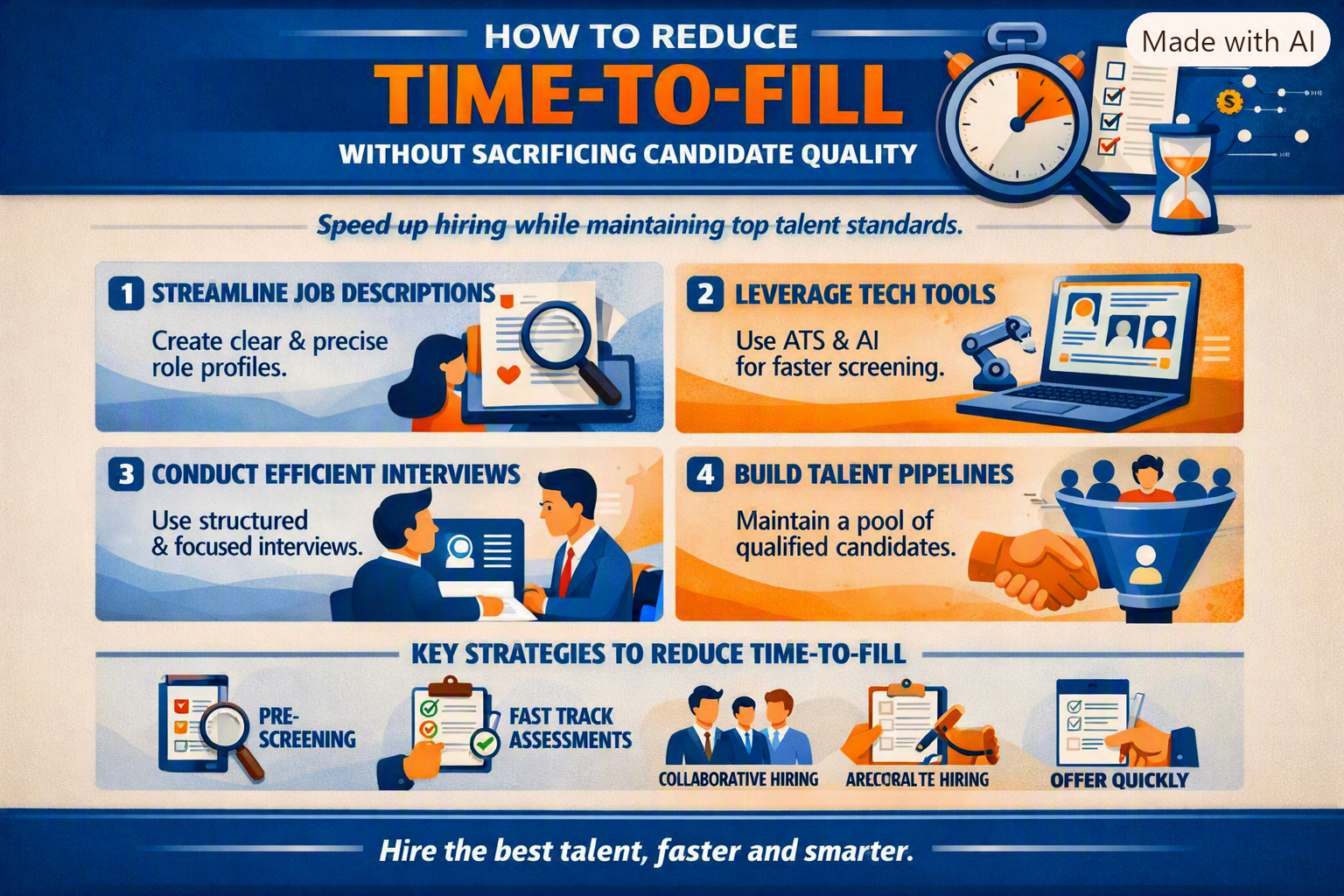
Introduction: Reduce Time-to-Fill
Hiring the right person can be a lengthy process. Still, leaving a vacant position unfilled for too long can cause issues for companies: teams may be overworked, projects delayed, and other staff struggling to take on extra work and manage their own responsibilities. This is why many companies are looking to reduce their time-to-fill. However, speeding up the hiring process should not come at the expense of hiring unqualified workers.
How to reduce time-to-fill without sacrificing candidate quality is a common challenge for many HR managers and recruiters. They should strive to make their hiring processes as efficient as possible while prioritizing the candidates’ qualifications.
How to Reduce Time-to-Fill Without Sacrificing Candidate Quality?
1. Start With a Clear Job Description
One of the most common reasons why companies fail to find suitable candidates quickly is a vague job description. Without clear information about the vacancy, workers who are not actually qualified for the position may waste everyone’s time.
Before publishing a job opening, hiring managers should establish a list of mandatory and optional qualifications and responsibilities. The job description should clearly state the roles, years of relevant experience, work arrangement, salary (if possible), and expectations from the candidate.
2. Develop a Talent Pool
Many companies start their recruitment drives too late, which ultimately prolongs the hiring process. To improve their chances at landing on an applicant’s shortlist, recruiters should develop a talent pool of suitable candidates.
A talent pool refers to a database of candidates who have applied to similar positions in the past, have been rejected despite being a good fit, former employees, and those who have expressed interest in working for the company. When a new vacancy emerges, recruiters can immediately contact these individuals and ask them to apply.
3. Streamline the Candidate Screening Process
Managers reviewing hundreds of candidates’ applications manually can spend too much time screening applicants. To reduce time spent on candidate screening, recruiters can put together a system of basic requirements that all vacancies in the company must have.
For instance, recruiters can decide that they will only consider candidates with a degree, years of relevant work experience, certain hard skills, availability, location, and other factors relevant to the position. Additionally, recruitment software can help recruiters manage the hiring process and quickly sort out applicants who do not meet baseline criteria. While automation is a great tool for sifting through hundreds or even thousands of applications, technology should not replace human intuition entirely.
A streamlined screening process is only valuable when it has been optimized to reduce the time spent on unviable candidates while not losing sight of the applicants’ overall qualification for the post.
4. Limit the Number of Interview Rounds
While holding interviews is an important part of the selection process, some companies implement too many rounds of interviews, which prolong the hiring process unnecessarily. In most cases, two or three interviews are sufficient for most posts. One interview can assess the candidate’s hard skills, and the second one – their soft skills, communication, and cultural fit for the team.
The main point is for each interviewer to have a specific goal in mind during the conversation. Additionally, all members of the hiring committee should establish what they expect from the candidate and what they will discuss during the interview.
5. Avoid Leaving Candidates Waiting
Most candidates will not react well to recruiters keeping them waiting for weeks or months for an interview reply. Recruiters and hiring managers often keep candidates waiting because they do not maintain an up-to-date schedule. To avoid this issue, companies can block time slots with possible interview dates for candidates.
This practice helps both sides since recruiters will have a clear idea of when they can expect new applicants to be available, and hiring managers will always have slots ready for new candidates. For highly-skilled and sought-after professionals, it may be worth considering blocking several time slots per week for interviews.
6. Make Sure to Make a Hiring Decision Promptly
After a recruiter finds an ideal candidate for the post, the process can be delayed for various administrative reasons. During these periods of waiting, employees may change their minds, and excellent candidates may move on to other employers. Prior to conducting interviews, recruiters and hiring managers should establish a set of selection criteria and agree on the final say in the hiring decision. Following the final interview, the recruiter should request the evaluators’ feedback as soon as possible.
A short feedback form can help hiring managers avoid unnecessary meetings and interviews while still evaluating the candidate’s suitability for the position. If the candidate is a good fit, the company should make the offer instead of unnecessarily prolonging the hiring process.
Conclusion: Reduce Time-to-Fill
Reducing the time-to-fill requires companies to optimize their hiring process without compromising the quality of the new hires. Implementing the practices described above, such as establishing a set of mandatory requirements, developing a talent pool, limiting the number of interviews, and others can help recruiters and hiring managers improve their time-to-fill substantially.
However, the best hiring process does not necessarily mean the fastest one. It refers to a carefully-tailored set of steps that allow the company to hire a qualified person in a reasonable amount of time while not putting unnecessary pressure on the candidates.
Ready to reduce time-to-fill without compromising candidate quality? Use the right hiring strategies and streamline your recruitment process with the Best Job Tool platform to find qualified candidates faster and make smarter hiring decisions.




Leave a Reply