Introduction: Career Security
Working at a startup is exciting. You have the potential to step into a whirlwind of responsibilities where you will learn new skills, grow exponentially, and network with influential people. The problems at a startup are multifaceted – a pivot at any time, shifts in executive leadership, funding issues, layoffs, and even complete restructuring of the board of directors – can leave a lasting impact on employees and their work.
It does not mean that one should not risk being a part of a volatile but promising project. Instead, think of ways to secure one’s career in the unstable environment of a startup by accumulating leverage, experience, and connections that will come in handy when unexpected changes occur.
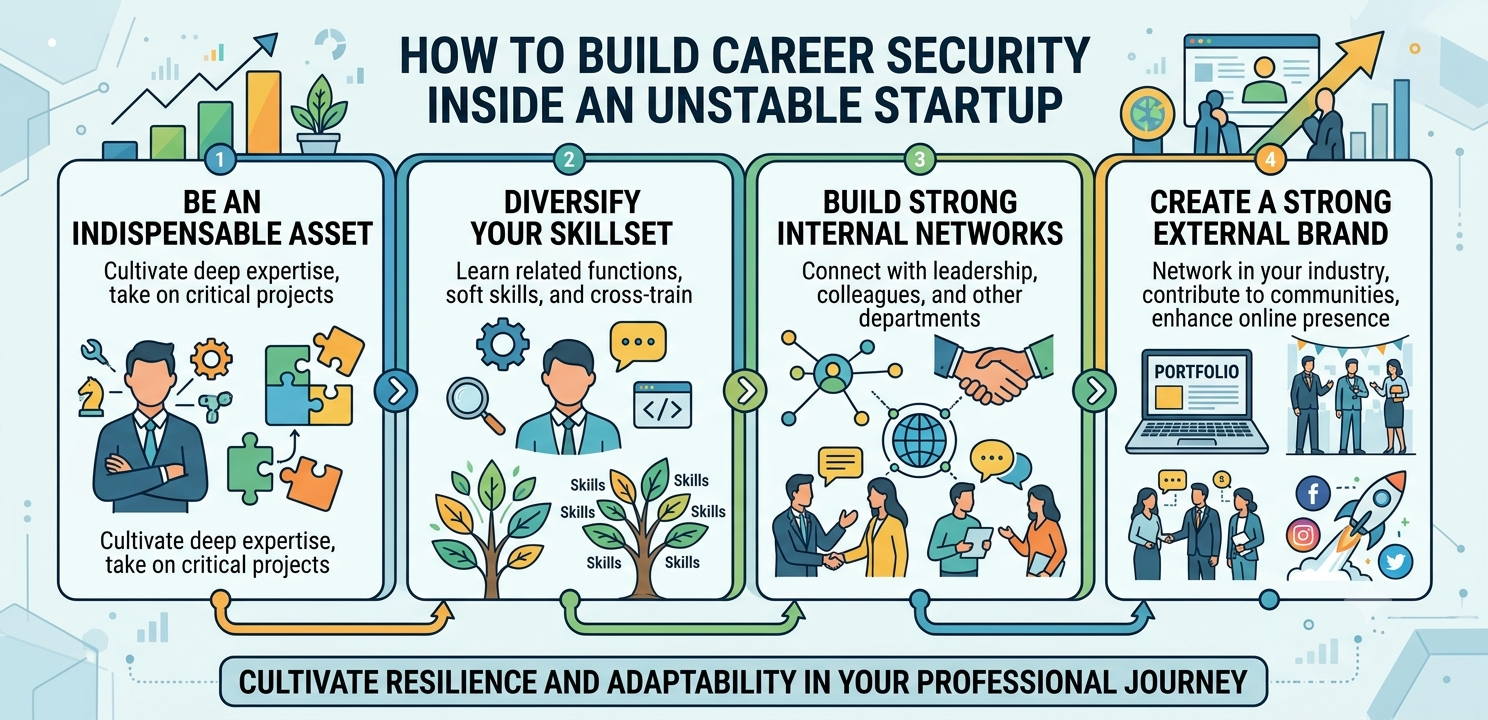
How to Build Career Security Inside an Unstable Startup?
1. Know the Ins and Outs of the Business
A good place to start is to understand how the business works. This knowledge will help you identify the most critical points and prepare for any changes.. It is not necessary to be an expert in finance – it suffices to understand what the company does, who its target audience and competitors are, and what its primary sources of revenue are.
Once the basics of the company are understood, it will be easier to structure priorities around more relevant goals. For instance, if the company’s key priority is to reduce customer attrition, then any project that contributes to this goal will be of higher value.
Also, knowing the ins and outs of the company will help in selecting the most relevant projects that support the company’s bottom line.
2. Do Not Specialize Exclusively in the Startup
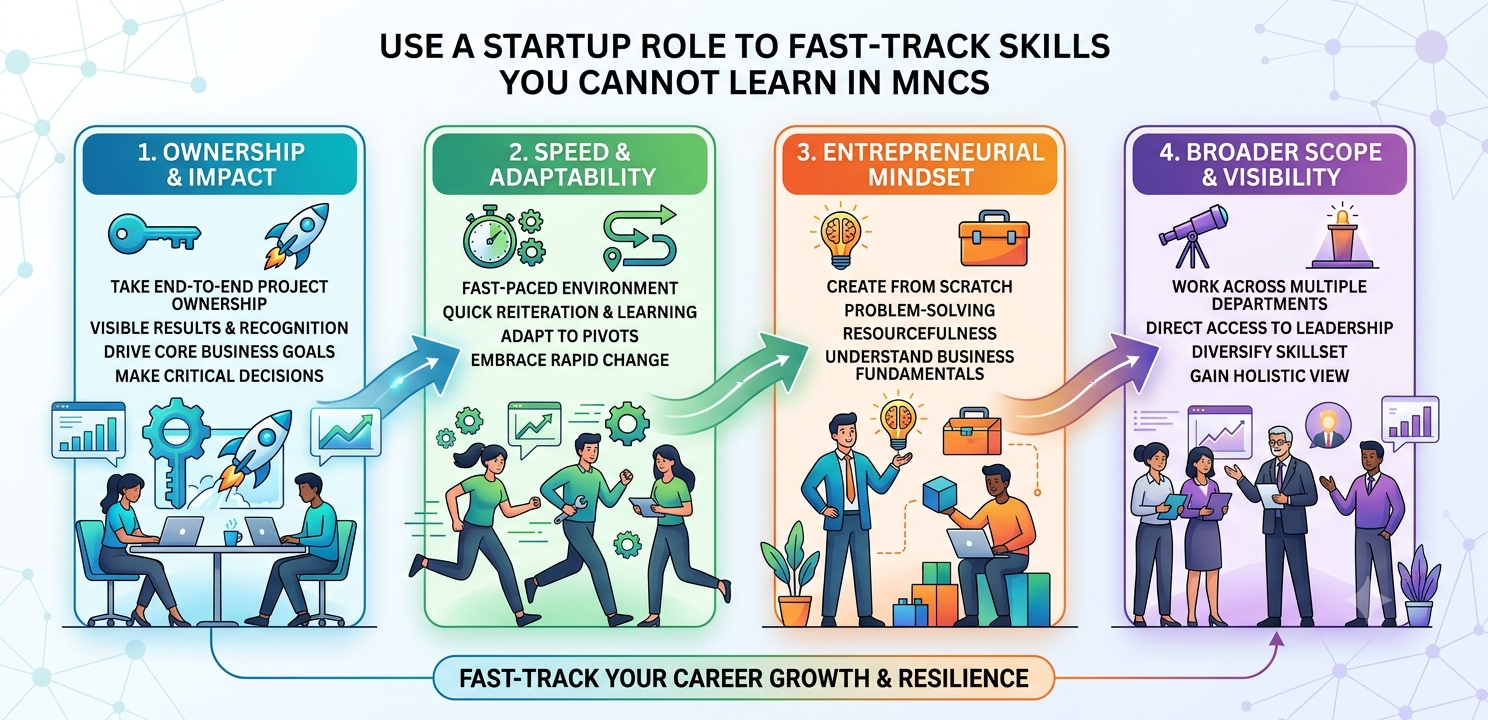
The primary value of working at a risky but promising project is the ability to acquire multidisciplinary skills. It is essential to remain valuable to the company even if things take an unexpected turn.
It indicates that the employee should not specialize exclusively in things relevant to the company – instead, build an arsenal of marketable skills that can be easily transferred to different workplaces. Some good examples are hard skills in demand in the industry, such as marketing automation, data science, digital marketing, or graphic design, or soft skills, such as communication, management, and negotiation.
While you need to understand the company’s products and services, you should also learn the broader context, including how similar products and services are used in the industry and what tools and tactics companies employ.
3. Leverage Every Opportunity to Demonstrate Your Value
Working at a startup implies that there are fewer employees, and therefore each member has a broader scope of responsibility. At the same time, not all contributions can be captured in a weekly or monthly report.
Therefore, it is crucial to track and document every activity that contributes to the company’s success. Whenever making a difference, mark it as an achievement and add it to the list of accomplishments. When applicable, use metrics to demonstrate the impact – for instance, it is much easier to show how social media campaigns influenced sales figures than to describe the intangible improvements that took place.
You can later use these achievements to update your resume or inform your manager about your contributions to the project.
4. Establish Meaningful Connections Outside of the Office
While the connection to one’s direct supervisor is important, it is preferable to build a professional network that will span across different industries and job roles. It is not necessary to communicate with people daily, but it is important to keep track of developments and innovations in the area.
Meaningful connections can be made with former colleagues, recruiters, suppliers, partners, mentors, and clients. Do not underestimate the power of networking – sometimes, an old acquaintance can provide fresh insight into the industry or share an exciting opportunity.
It is not necessary to rely exclusively on one’s network to find a new job, but having a group of trusted contacts will always be a safety net in case of emergency.
5. Do Not Become Too Narrowly-Specialized in One Company
Working at a startup involves the risk of becoming too narrow because the company typically operates with little structure and utilizes unique tools and methodologies. As a result, one becomes the only person who understands a particular process.
This can be a double-edged sword – on the one hand, the knowledge of the unique process becomes one of the main assets, and on the other hand, the departure of the employee will cause serious disruptions, which becomes a career risk.
You can mitigate this career risk by learning the theoretical background of the tools and methods your company uses, along with alternative solutions used by similar companies.
This way, one will still be able to utilize the deep knowledge of the tools and processes with the ability to explain the rationale behind them.
6. Keep Your Resume and Portfolio Updated
It is important to always be able to update one’s resume and professional skills list. One should always be able to identify at least one meaningful achievement made during the past few months. If applicable, update the portfolio with new projects and successes. It might be helpful to dedicate a part of a resume to the experience at the startup, outlining the primary contributions.
Being prepared is frequently a blessing in disguise – working with a high-profile company might be detrimental if that company goes bankrupt anyway. However, the ability to present credentials and achievements makes the transition to a new project much smoother.
Besides, it provides the opportunity to reduce the stress of daily tasks and dedicate more time to improving one’s qualifications and preparing for the uncertain future.
Conclusion: Career Security
Building career security inside an unstable startup requires more than hoping the company succeeds. Focus on developing transferable skills, delivering measurable results, maintaining strong professional relationships, and keeping your resume and network up to date.
Pay attention to changes in the company’s finances, leadership, and business direction so you can prepare for potential risks early. A startup may remain unpredictable, but by making yourself adaptable, valuable, and prepared for change, you can protect your career regardless of what happens next.
Ready to build a more secure career in an unstable startup? Take control of your growth, strengthen your skills, and stay prepared for your next opportunity. Explore the Best Job Tool platform to discover relevant jobs and keep your career options open.

Leave a Reply