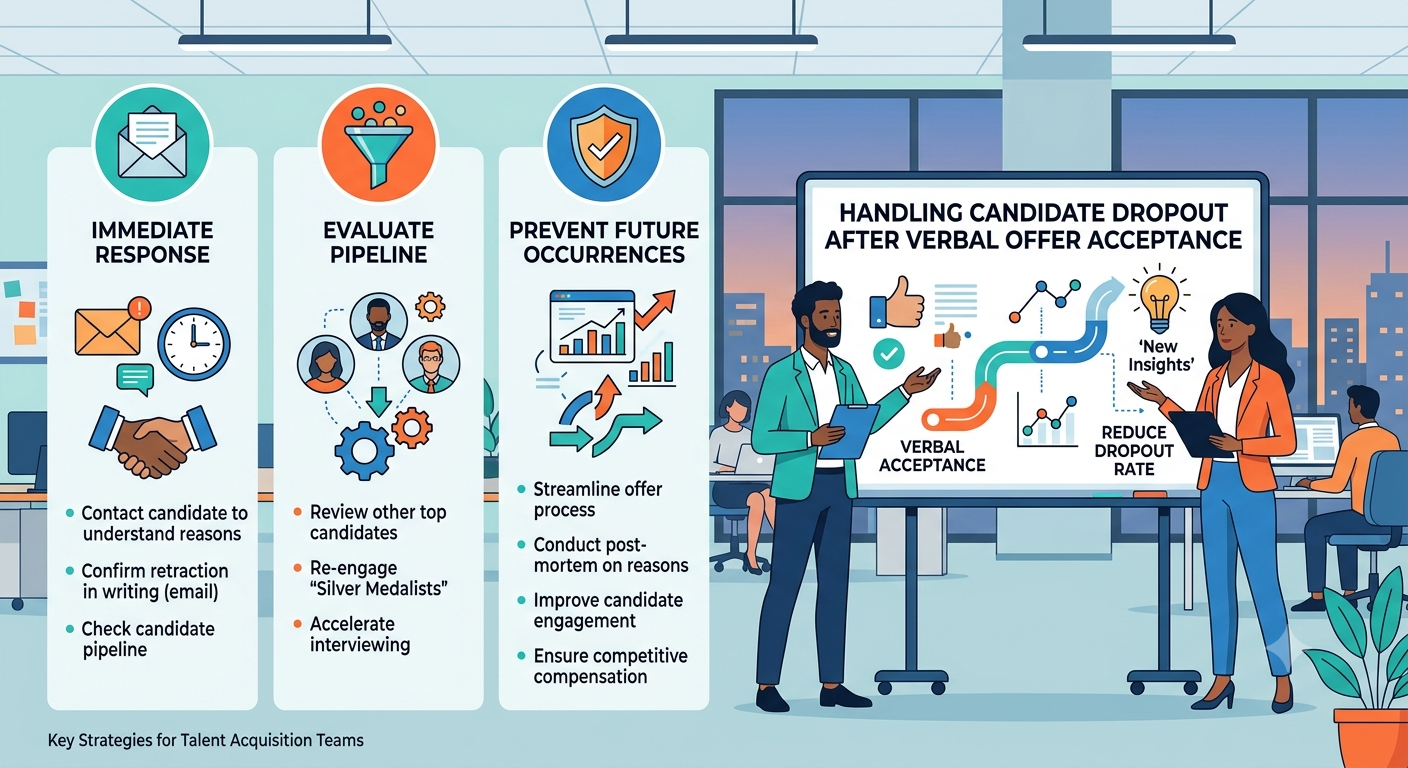
Introduction: Candidate Dropout
Many businesses fail to recognize that recruitment does not always end after candidates accept verbal job offers. Sometimes, people change their minds at the last moment after verbal offers, accept alternative postings, or re-examine their salary levels. All the reasons mentioned above are enough for candidates to drop out after verbally accepting a job offer. Hence, candidate dropouts can challenge the ability of recruiters and hiring managers to fill vacancies in a reasonable amount of time. It results in wasted recruitment resources for companies and leaves unfilled jobs vacant for a long time.
Therefore, it is critical to establish successful strategies for managing candidate dropouts after verbal offer acceptance. This paper aims to discuss ways of handling candidate dropout after verbal offer acceptance and prevent such situations in the future.
How to Handle Candidate Dropout After Verbal Offer Acceptance?
1. Understand why the candidate withdrew
The primary step in dealing with candidate dropouts after verbal offer acceptance is learning the reasons for candidates’ withdrawal. To achieve this goal, recruiters should not make any assumptions about the reasons for candidate dropout. Instead, they should initiate polite communication with the candidates to learn the reasons for their withdrawal.
There are different factors that can play a role in candidates’ withdrawal after verbally accepting a job offer. First, candidates can withdraw if they received a better salary offer from other employers. Second, sometimes people fail to understand the nature of the job, the nature of interactions with their future superiors, and responsibilities that the vacancy entails. In addition, they might have received more exciting job offers. The reasons mentioned above are enough for candidates to drop out of the recruitment process after verbally accepting an offer.
2. Keep the conversation professional
When facing candidates who drop out after verbally accepting a job offer, recruiters should keep the conversation professional. It is inadvisable to force candidates to change their minds or express frustration about the situation. Instead, recruiters should acknowledge the candidates’ decision and ask polite questions about the reasons for their withdrawal from the recruitment process. For example, a recruiter can express gratitude for a candidate’s honesty about their intentions and ask whether money or the nature of responsibilities was the reason for their withdrawal. Even if the candidate drops out of the recruitment process, a polite attitude and a professional manner will leave a positive impression on the candidates. It might incentivize them to reconsider their decisions and apply to the company again or refer their acquittance who fits the requirements for the vacancy.
3. Keep backup candidates engaged
To minimize the impact of candidates dropping out of the recruitment process after verbally accepting a job offer, recruiters should develop and maintain a list of their backup candidates. This tactic allows recruiters to reduce the amount of wasted resources on recruitment significantly. In case of a candidate dropout, recruiters do not need to initiate a search for new candidates from scratch. They can simply contact their backup applicants and inform them about the vacancy.
Nevertheless, it is critical to emphasize that recruiters should not promise jobs to their backup candidates before contacting them about an empty vacancy. Simultaneously, as long as recruiters keep proper communication with their shortlisted candidates and backup candidates, the mentioned step will be unnecessary. Maintaining a constant connection with both groups of candidates is important for ensuring the fast filling of vacancies in the company.
4. Make sure the candidate understands his or her options
A verbal offer signifies a candidate’s interest in a specific vacancy as well as their expectations regarding salaries, joining dates, and working conditions. However, a verbal offer does not guarantee that the candidate will eventually occupy the vacant position. Therefore, one should learn whether the candidate understands their options before making any assumptions about their final decision.
Before verbally offering a job to the candidate, recruiters should inform them of their expectations from future employees regarding joining dates, salaries, communication channels, working conditions, and responsibilities. Recruiters should welcome any questions the candidate can ask before verbally offering the vacancy.
For example, the recruiter can additionally ask whether the candidate is comfortable with the proposed salary and joining date and give them an opportunity to express dissatisfactions or concerns about these aspects of the recruitment process. It will give recruiters and the candidate an opportunity to clarify doubts and give the candidate a chance to reconsider their decision before it becomes final. In addition, a recruiter should additionally explain what the next step is and when the candidate should expect a written offer. Moreover, it is important to let the candidates know what further actions they should take and what documents they should submit.
5. Enhance the candidate’s experience with the company
Sometimes, candidates drop out of the recruitment process after verbally accepting a job offer due to negative experiences during the recruitment process. For instance, applicants might be unsure about their decision to participate in the recruitment process. Furthermore, they might have concerns about the company after receiving the verbal job offer.
To prevent the previously-mentioned situations, it is advisable to send written job offers to applicants soon after verbally offering them a job position and clarifying the details of the employment contract. Simultaneously, recruiters should keep updating their candidates regarding employment conditions, the company’s atmosphere and values, and career development opportunities.
After a candidate verbally accepts a job offer, recruiters should pay special attention to keeping their candidates engaged in the recruitment process. Doing so increases the chances of the candidate eventually occupying the vacant position. However, it is critical to emphasize that recruiters should not make promises that the company cannot keep.
6. Determine the compensation-related issues
Salary expectations are one of the essential parts of the recruitment process. Therefore, if candidates drop out of the recruitment process after verbally accepting a job offer because of compensation-related issues, recruiters should conduct extensive research on salary expectations in their industry. Simultaneously, it is advisable to examine the compensation-related offers that other employers can make to candidates.
In case of candidates expressing dissatisfaction with the proposed salary or benefits package, recruiters should contact the hiring managers to go over the possibilities of additional compensation. For example, the company can supplement the salary with various benefits and provide remote work options if possible. It is essential to analyze the candidates’ requirements and match them with what the company can offer.
Nevertheless, it is critical to examine the realistic range of compensation-related offers that the company can make to the candidates. Doing so can help recruiters prevent the situations when candidates drop out of the recruitment process after verbally accepting a job offer due to compensation-related issues.
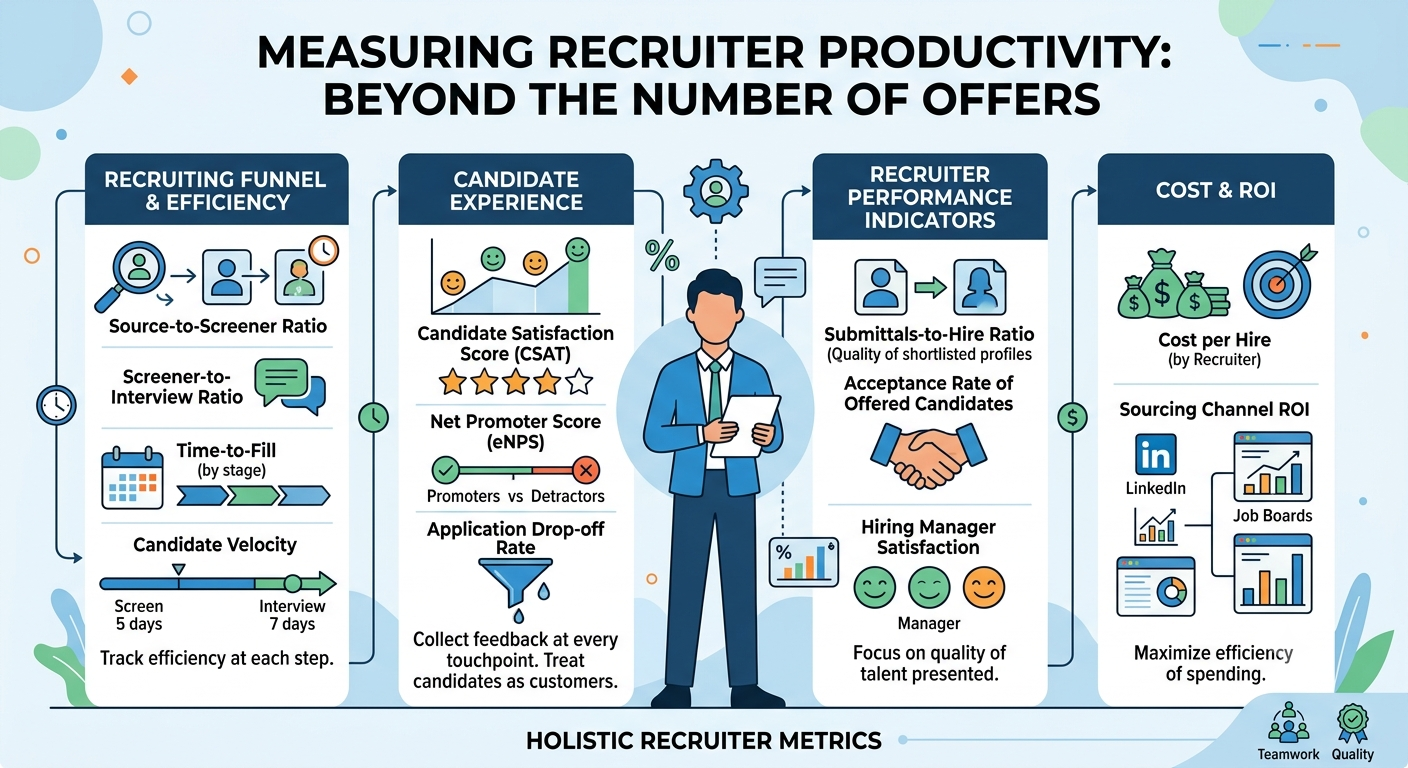
7. Measure your recruitment key performance indicators
Sometimes, recruiters might be unsure whether a single instance of candidate dropout after verbally offering them a job represents the start of a more significant problem in the recruitment process. Therefore, to determine the nature of the issue, it is essential to measure recruitment KPIs to find out whether there is an issue or not.
Essentially, recruiters should analyze such recruitment KPIs as verbal offer acceptance rate, verbal offer dropout rate, time to hire, and number of candidates who dropped out of the process before joining the company. For example, if several candidates drop out of the recruitment process after verbally accepting a job offer because they received job offers from other employers with better salaries, recruiters should re-examine the timing of sending written job offers to their candidates.
At the same time, if several candidates drop out of the recruitment process after receiving verbal job offers due to salary expectations, recruiters should take appropriate measures to analyze the average market compensation that their industry offers and set realistic ranges of acceptable compensation for vacant positions. It will allow the recruiters to fix the issue and prevent the similar situations in the future.
Conclusion: Candidate dropout
Candidate dropout after verbal offer acceptance can be a destructive discovery for recruiters. Nevertheless, recruiters can successfully manage such situations by understanding their candidates’ concerns, keeping communication with them professional, contacting their backup candidates, and enhancing the candidates’ experiences with the company. Simultaneously, recruiters should also examine realistic compensation ranges for their vacant positions and analyze recruitment KPIs to determine recurring issues.
Although recruiters might not be able to manage every instance of candidate dropouts, they can minimize the impact that it can have on the company’s recruitment process.
Reduce candidate dropouts after verbal offer acceptance with the best job tools. Streamline your recruitment process, improve candidate engagement, and connect with the right talent to fill vacancies faster. Explore the Best Job Tools today to make hiring more efficient.



Leave a Reply