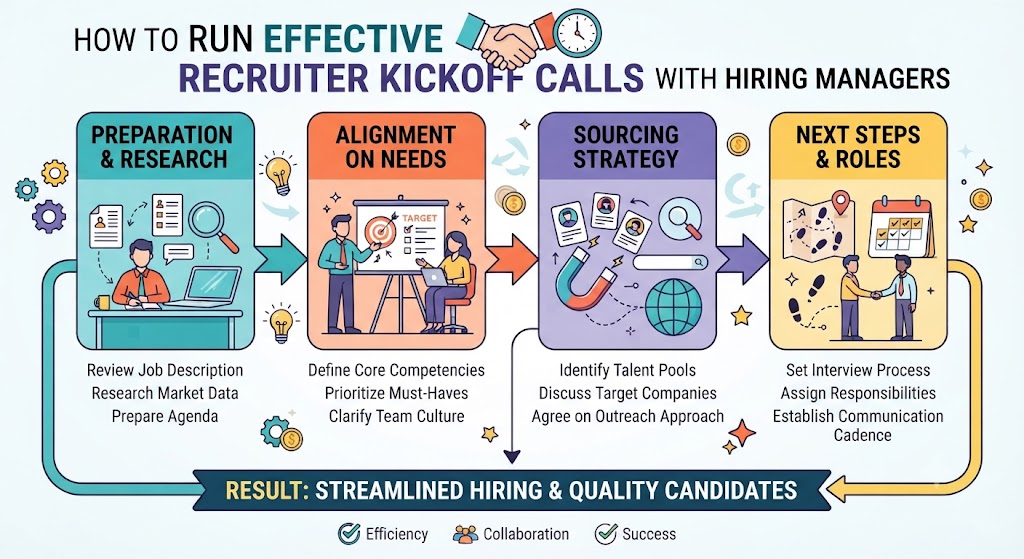
Recruiter kickoff calls are a critical first step in building an effective hiring process. Before sourcing candidates, publishing job descriptions, or scheduling interviews, recruiters need a clear understanding of what the hiring manager expects from the role. Without this alignment, recruitment teams may spend valuable time evaluating unsuitable candidates, revising job requirements, and managing unnecessary delays.
An effective kickoff call establishes a shared understanding of the position, required Effective skills, hiring priorities, interview process, and expected timeline. It also helps recruiters understand the team’s working environment, communication preferences, and long-term objectives. Consequently, recruiters can develop a more focused sourcing strategy and present candidates who meet the organization’s actual needs.
As hiring becomes increasingly competitive, structured kickoff meetings are especially important for remote teams and organizations recruiting across multiple countries. Clear documentation, Effective realistic deadlines, and consistent communication help everyone stay aligned despite different schedules and time zones.
Why Recruiter Kickoff Calls Matter
A recruiter kickoff call is a structured discussion between a recruiter and a hiring manager before active recruitment begins. Its purpose is to translate a business requirement into a practical hiring plan.
A job description alone rarely provides enough information to identify the strongest candidates. It may list qualifications and responsibilities without explaining which skills are essential, what challenges the new employee will address, or how success will be measured.
For example, a hiring manager requesting a project manager may prioritize technical knowledge, stakeholder communication, budget management, or experience leading distributed teams. Each priority produces a different candidate profile.
A kickoff call helps clarify these differences before sourcing starts.
Key benefits include:
- Better candidate alignment: Recruiters understand which qualifications and experiences matter most.
- Faster screening: Clear criteria reduce time spent evaluating unsuitable applications.
- Fewer misunderstandings: Both parties agree on expectations before the search begins.
- Improved candidate experience: Applicants receive more accurate information about the role and hiring process.
- Greater accountability: Agreed deadlines and responsibilities make progress easier to track.
Ultimately, the objective is not simply to fill a vacancy. It is to identify a qualified candidate who can address the team’s needs and succeed in the position.
Prepare Before the Kickoff Meeting
An effective kickoff call begins before the meeting itself. Effective Recruiters should review the available information, identify gaps, and prepare focused questions rather than relying on an informal conversation.
Start by reviewing the job description, organizational structure, previous hiring data, and any information provided by the hiring manager. If the role has been open before, examine what worked or failed during the previous search.
Next, identify areas that require clarification. These may include unclear qualifications, competing priorities, salary expectations, reporting relationships, or uncertainty about the interview process.Effective
Before the meeting, prepare a short agenda covering:
- Business reasons for opening the position.
- Core responsibilities and expected outcomes.
- Essential and preferred qualifications.
- Salary range and employment arrangements.
- Candidate sourcing and screening criteria.
- Interview stages and decision-makers.
- Hiring deadlines and communication expectations.
Share the agenda with the hiring manager in advance whenever possible. This allows both parties to prepare relevant information and reduces time spent discussing details that could have been reviewed earlier.
For remote hiring teams, include the meeting objective and relevant documents in the calendar invitation. If participants work across different time zones, confirm the meeting time carefully and ensure that everyone has access to the same materials.
A well-prepared recruiter can use the meeting to make decisions rather than simply collect information.
Clarify the Role, Business Need, and Success Metrics
One of the most important parts of a kickoff call is understanding why the organization needs the position.
Instead of immediately reviewing the job description, begin with the business problem the new employee is expected to solve. This creates context for evaluating candidates and helps recruiters explain the opportunity accurately.
Useful questions include:
- Why is this position being opened now?
- Is the role new or a replacement for an existing employee?
- What are the three most important responsibilities?
- What challenges should the successful candidate address during the first 90 days?
- How will performance be evaluated after six months?
- Which teams or stakeholders will the employee work with most frequently?
For example, a company hiring a marketing analyst may need someone to improve campaign measurement rather than simply produce reports. In that case, analytical thinking, data interpretation, and the ability to communicate business recommendations may be more important than experience with a particular reporting tool.
Recruiters should also clarify the role’s level of responsibility. Determine whether the employee will execute established processes, independently manage projects, or develop strategy.
Translate the answers into measurable success indicators. These might include improving reporting accuracy, reducing operational delays, managing a project portfolio, or supporting revenue growth.
Clear success metrics help recruiters evaluate candidates based on the work they will actually perform rather than relying exclusively on job titles or years of experience.
Separate Must-Have Qualifications From Preferred Skills
Hiring managers often provide long lists of qualifications. However, treating every requirement as essential can unnecessarily narrow the candidate pool and extend the recruitment timeline.
During the kickoff call, recruiters should distinguish between mandatory qualifications and skills that can be learned after joining.
Must-have requirements should relate directly to the responsibilities of the role. Depending on the position, these may include a legally required license, specific technical expertise, relevant experience, or authorization to perform regulated work.
Preferred qualifications can strengthen an application but should not automatically disqualify candidates who demonstrate equivalent capabilities through other experience.
Ask the hiring manager:
- Which skills are necessary from the first day?
- Which capabilities can be developed through training?
- Is a degree essential, or would equivalent experience be acceptable?
- Which technical tools are mandatory versus desirable?
- What evidence would demonstrate that a candidate can perform the work?
For example, a data analyst position may require strong spreadsheet skills and analytical reasoning while treating experience with a particular visualization platform as preferred.
Document these distinctions clearly. They will guide sourcing, resume screening, interviews, and final candidate comparisons.
Recruiters should also discuss transferable skills and alternative candidate backgrounds. A candidate from an adjacent industry may possess the problem-solving ability, communication skills, and technical foundation required for success.
By focusing on job-related evidence, recruiters can broaden access to Effective qualified candidates without compromising legitimate requirements.
Agree on Compensation, Work Arrangements, and Hiring Timelines
Misalignment around compensation, location, and availability can derail an otherwise successful recruitment process. Therefore, these topics should be discussed before the search begins.
Confirm the approved salary range, employment type, benefits information that may be shared, and any relevant approval requirements. If the hiring manager has unrealistic compensation expectations, discuss current market conditions and the potential effect on candidate availability.
Next, clarify the working arrangement. Determine whether best job tool the role is onsite, hybrid, or remote, and identify any location restrictions. For remote positions, discuss working-hour expectations, time-zone overlap, travel requirements, and whether employees must reside in a particular country.
These details are particularly important when recruiting internationally. Employers may need to consider work authorization, payroll arrangements, local employment rules, or relocation support.
The kickoff call should also establish a realistic hiring timeline. Discuss:
- When sourcing should begin.
- When the hiring manager will review submitted profiles.
- How quickly interview feedback will be provided.
- How many interview stages are necessary.
- Who has final decision-making authority.
- The expected offer and start-date timeline.
Avoid agreeing to arbitrary deadlines that cannot be supported by the availability of interviewers or the complexity of the position.
Instead, create a shared schedule with clear ownership. If a hiring manager expects candidates within a week



Leave a Reply