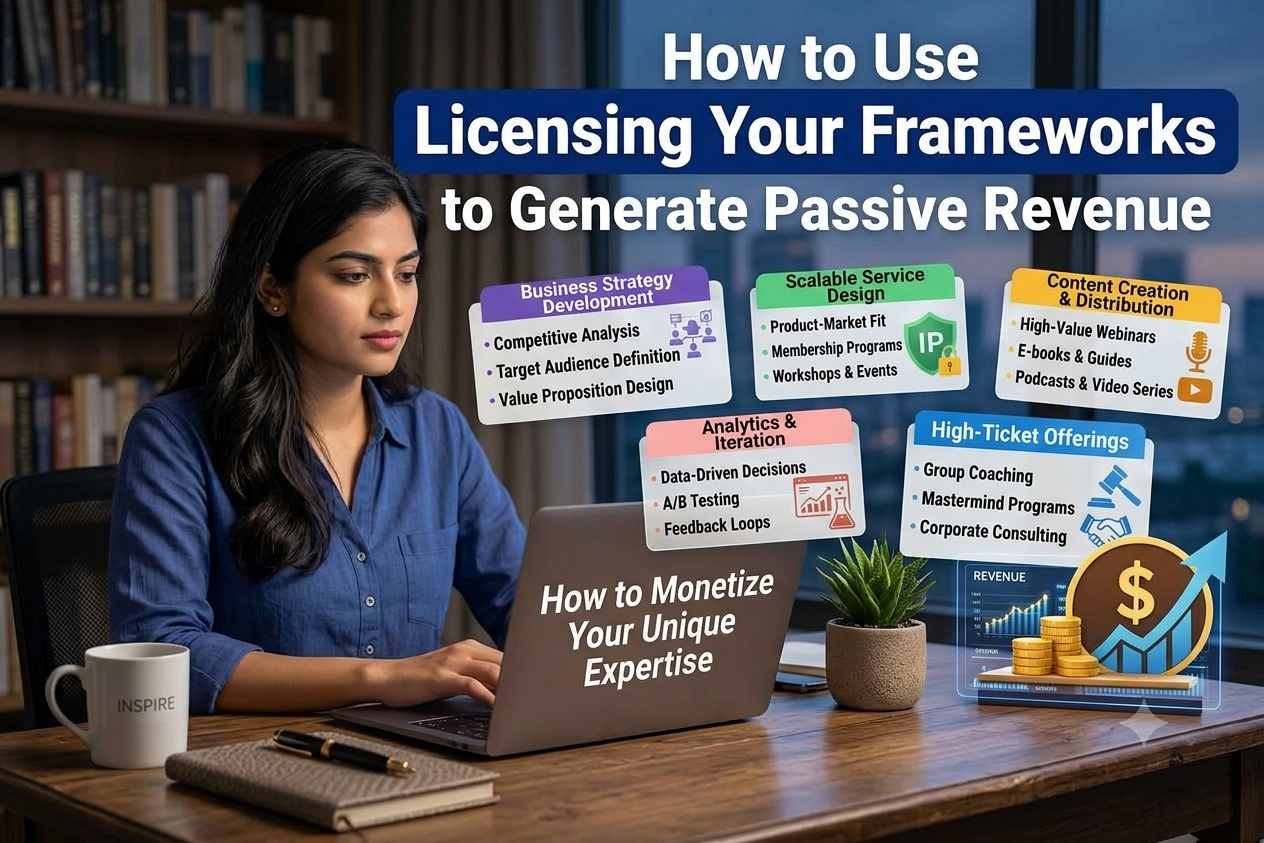
Introduction: Licensing Your Frameworks
Professionals invest thousands of hours perfecting their craft and building their expertise in a particular area. They develop approaches to work efficiently, achieve better results, and find deeper solutions. Licensing your frameworks allows professionals to turn their expertise as a valuable business asset while creating additional revenue opportunities.
The frameworks, however, are often utilized exclusively by the professionals who designed them and used to get superior results. Licensing is a way to monetize frameworks by allowing others to benefit from the intellectual property without having to deliver the actual service.
The guide below will walk you through ways to make money using frameworks.
How to License Your Frameworks for Passive Income?
1. Understand What Do You Mean by Framework Licensing
Licensing your frameworks grants other professionals the right to apply your established approaches while ensuring that you maintain ownership of your intellectual property.
For example, consultants can design a framework for maximizing productivity in teams. Instead of offering consulting services and helping businesses achieve their goals one by one, the consultant can license his framework to business coaches and consultants and earn a percentage of fees for every trained delegate.
The framework would provide the coach with the necessary tools to be able to deliver the service to a client. The rights to the framework and intellectual property would normally stay with the creator of the framework, however, it is important to stipulate that in the licensing agreement.
Similar frameworks can be created in virtually any profession, industry, or field. If someone has a solution for a known problem, another professional can take the solution, implement it, and offer it to someone else as a service.
2. Know Which Framework to License
The next step is to identify which framework to license. The framework does not necessarily have to be groundbreaking; however, it should offer significant benefits and savings for the end-user.
The best way is to take a look at your own practices and see if you have a systematic approach to achieving consistent results. Think of methods or approaches that enable you to reach your goals faster or work smarter. Before licensing your frameworks, identify the methods that consistently solve problems, save time, or help clients achieve measurable results.
Some frameworks can include a writer’s article writing guideline, a career coach’s framework for assisting clients during job interviews or a marketing consultant’s framework for social media customer engagement. Any systematic approach that can be implemented to achieve a specific goal can be considered a framework.
It is important to document the framework, outline its advantages, and define its application. A good framework should be able to clearly define the objectives, target audience, and benefits.
3. Protect Your Intellectual Property
Prior to licensing your framework, it is important to protect your intellectual property. In most cases, your framework will require legal protection in order to be licensed. A clear legal agreement is necessary when licensing your frameworks because it specifies the terms under which your materials can be used.
Depending on a type of the framework, copyright, trademark, or any other applicable law, may offer sufficient protection. Consult a reputed lawyer to better understand what kind of protection your framework needs.
It is also vital to define the scope of usage and what limitations, if any, will be applied. The framework can also include a detailed explanation of how the licensed material can be used.
For example, the license can define if the framework can be modified, redistributed, resold, and integrated with other materials. A separate agreement should also define if the framework can be used for commercial purposes.
Licensing agreements can also stipulate the length of the contract, renewal fees, and limitations regarding redistribution.
4. Choose the Right Licensing Strategy
There are different types of licensing, including non-exclusive, exclusive, subscription-based licensing, per user/location based licensing and others. Choose the licensing strategy that suits your target audience, business needs, and the value of your framework.
Non-exclusive licensing is the most common type and allows you to have multiple customers. It means that you retain the rights to the framework and anyone else can also license the framework. This type of licensing should not limit you from selling the same framework to your competitors or finding other customers that need the framework.
If you think that your framework has significant value, you can also sell exclusive licensing to a company for a specific geographic location, industry, or time frame.
In some cases, companies also purchase subscription-based services, allowing the seller to receive a consistent stream of income while the buyer is using the framework. In other cases, the companies may also negotiate per user or per location-based pricing.
New consultants and marketers may find that non-exclusive licensing is the best option since they will retain full control of their framework and can sell it to multiple buyers without having to create separate products for each.
5. Define the Price of Your Licensing Offer
The next step is to define a profitable price. The value of your framework should be higher than the time and effort you put into it, not the amount of money you are willing to charge for similar services.
Determine what the framework offers to a potential buyer, what benefits they will receive, and what they may have to pay to acquire the framework.
For example, you may want to charge a few hundred or a few thousand dollars for a simple annual licensing fee for a coach. At the same time, the company may require a more involved framework with additional costs and support.
You may also decide to sell an initial license and then charge renewal fees every year. It is important not to promise results that the framework cannot deliver. In some cases, it may also make sense to provide support for an additional fee.
Research similar products in the market and have a general idea about how much competition is willing to charge before finalizing the price. Make sure not to overpromise and overcharge at the same time.
6. Know Where to Sell Your Framework
Having a great framework is one thing, getting the right audience to purchase it is a completely different matter. There are different ways to attract the right customers to your framework.
For example, you can utilize LinkedIn to network with consultants, company owners, coaches, and any other professional that can potentially benefit from your framework. It is important to make posts that show the benefits and advantages of your framework without giving away too much information.
You can also consider developing a landing page that will offer the basic information about your framework and licensing offer, along with the benefits, features, and the ways to purchase the framework.
Another good way to find potential customers is to look for businesses or individuals that already provide similar services as you do, such as coaches, consultants, business planners, and trainers. If you are a career coach, for example, you can reach out to colleges and offer to license your interview preparation framework to their consulting staff.
7. Build the System Around Licensing Passive Income
Licensing can increase your income with less time, but it still requires marketing, license renewals, refunds, and customer support. Create a standard license package, FAQs, a simple contract, an easy payment system, and an onboarding process to help customers use your framework efficiently. Regularly update your framework and license package to offer more value, justify higher prices, and encourage renewals.
Conclusion: Licensing Your Frameworks
Licensing your frameworks is a practical way to turn your professional expertise into an additional revenue stream. By offering valuable frameworks, setting clear licensing terms, and updating your resources regularly, you can help other professionals benefit from your knowledge while increasing your earning potential. Although licensing requires marketing and customer support, it allows you to reach more clients without delivering every service yourself. With the right strategy, you can build a sustainable and scalable business.
Ready to turn your expertise into income? Explore the Best Job Tools to connect with potential clients, discover new opportunities, and grow your licensing business.


Leave a Reply