
Best Career
Career advice often focuses on doing more. Learn another skill. Apply to more jobs. Attend more networking events. Work longer hours. Take on additional responsibilities. Build a personal brand. Complete another certification.
While consistent effort matters, doing more is not always the same as making progress.
In many careers, professionals eventually reach a point where the problem is not a lack of activity but a lack of prioritization. Too many projects, meetings, applications, commitments, and learning goals can divide attention and reduce the quality of important work.
Doing less does not mean becoming less ambitious. Instead, it means identifying activities that contribute meaningfully to your career and reducing those that consume time without producing comparable value.
This approach can improve productivity, create space for deeper work, support better career decisions, and reduce unnecessary financial and professional commitments. It is particularly useful for professionals managing remote work, job searches, travel, skill development, and long-term career planning.
1. Stop Treating Busyness as Career Progress
A full calendar can create the appearance of professional growth. However, activity should not be confused with results.
Someone can attend several networking events, complete multiple courses, answer dozens of emails, and participate in countless meetings without making meaningful progress toward a career objective.
Instead, identify measurable outcomes.
For example:
- Completing a project that demonstrates a valuable skill
- Increasing responsibility within your role
- Building a portfolio
- Developing an important professional relationship
- Improving a measurable business result
- Applying for carefully selected positions
- Learning a skill directly connected to your target career
At the beginning of each week, identify the two or three outcomes that matter most.
Then ask whether your schedule actually gives those priorities enough time.
If not, remove or reduce lower-value activities.
2. Focus on Fewer Skills With Greater Career Value
Professionals often respond to uncertainty by learning everything they can. This can lead to an endless cycle of courses, certifications, tutorials, and webinars.
A better strategy is to identify a smaller number of skills that connect directly to your desired career path.
Start with the roles you want to pursue. Review several job descriptions and identify recurring requirements.
Then divide the requirements into three categories:
Already strong:
Skills you can demonstrate through professional experience.
Developing:
Skills you understand but need to strengthen.
Priority gaps:
Skills that repeatedly appear in relevant roles but are currently missing.
Focus your learning on the priority gaps first.
A global job platform such as a best job tool can help professionals research job opportunities and compare recurring requirements across employers. This can make skill development more targeted instead of based on general assumptions about what might be useful.
3. Reduce Low-Value Meetings and Notifications
Remote work can increase digital distractions. Messages, emails, video meetings, collaboration platforms, and notifications can fragment the working day.
The result is often a schedule filled with small interruptions rather than meaningful blocks of concentration.
Professionals can reduce this by:
- Turning off nonessential notifications
- Checking email at designated times
- Declining meetings without a clear purpose
- Requesting agendas before meetings
- Using asynchronous communication when appropriate
- Creating uninterrupted focus periods
- Keeping separate time for administrative work
Not every meeting needs to become an email. However, not every issue needs a meeting either.
The objective is to protect time for work that requires concentration.
4. Apply for Fewer Jobs With Better Targeting
Job seekers often assume that submitting more applications automatically increases their chances of finding employment.
Quantity can matter, but indiscriminate applications can consume significant time while producing limited results.
Instead, create a target profile based on:
- Desired job title
- Relevant industry
- Required experience
- Location preferences
- Remote, hybrid, or onsite expectations
- Salary requirements
- Career progression potential
- Required technical skills
Then prioritize positions that genuinely match your profile.
For each important application:
- Customize the resume around relevant experience
- Highlight measurable achievements
- Review the company’s requirements
- Adjust your professional summary when appropriate
- Prepare for likely interview questions
- Research the organization before the interview
This approach requires fewer applications but creates a more structured job-search process.
5. Say No to Work That Does Not Support Your Direction
As professionals become more experienced, their ability to say no becomes increasingly important.
Every additional responsibility has an opportunity cost.
Before accepting a new task, ask:
Does this responsibility contribute to my current priorities?
If the answer is unclear, evaluate its potential value.
A task may still be worthwhile if it:
- Builds an important skill
- Increases visibility with relevant stakeholders
- Creates measurable business impact
- Provides leadership experience
- Supports a future career transition
However, repeated low-value work can consume time that could be used for more meaningful responsibilities.
Saying no does not need to be confrontational.
You can say:
“I can take this on, but I would need to move one of my current priorities. Which should take precedence?”
This communicates willingness while making the workload trade-off visible.
6. Protect Your Productivity During Travel and Remote Work
Doing less becomes particularly important when working remotely or traveling.
A flexible location can create the impression that professionals can work at any time. In reality, constant availability can reduce productivity.
Before working from another location, establish:
- Core working hours
- Meeting windows
- Reliable internet
- A dedicated workspace
- Backup connectivity
- Expected response times
- Clear boundaries outside working hours
Travel testing can help determine whether a location actually supports productive work.
For example, before spending several weeks working from another city, test the arrangement for a few days. Track internet reliability, workspace quality, distractions, time-zone issues, expenses, and concentration.
If productivity consistently declines, the location may not be suitable for extended remote work.
The objective is not to maximize the number of places from which you can work. It is to identify environments where you can work effectively.
7. Simplify Your Career and Financial Decisions
Career decisions become harder when too many options remain open.
Professionals can reduce decision fatigue by establishing clear criteria.
For a new job, these might include:
- Role relevance
- Career development
- Compensation
- Work arrangement
- Company stability
- Location
- Learning opportunities
Financial planning can follow the same principle.
Instead of tracking dozens of unnecessary categories, identify the expenses that have the greatest impact on your financial stability.
Review:
- Housing
- Debt
- Transportation
- Insurance
- Savings
- Emergency funds
- Professional development
- Travel expenses
Then determine which expenses directly support your current priorities.
For example, if you are preparing for a career transition, maintaining an emergency fund may provide more flexibility than spending heavily on nonessential lifestyle upgrades.
Doing less financially can also mean reducing unnecessary commitments so that you have greater flexibility when an important career opportunity appears.
Conclusion
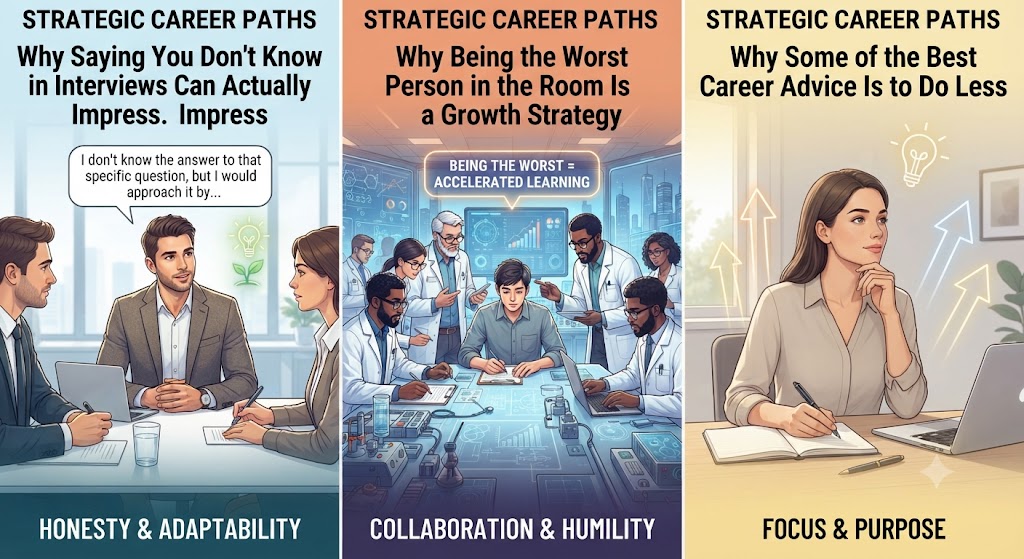
Doing less is not about reducing ambition. It is about increasing the value of your effort.
Professionals often reach career plateaus not because they lack motivation, but because their attention is distributed across too many priorities. By reducing unnecessary tasks, meetings, applications, learning goals, expenses, and commitments, they can create more space for meaningful work.
The practical approach is straightforward: identify the outcomes that matter most, remove activities that do not support them, and protect time for focused work.
A best job tool can support a focused career search by helping professionals explore relevant opportunities rather than treating every available position as a potential application.
Career growth does not always require adding another responsibility, skill, meeting, or commitment. Sometimes, the most productive step is to remove what is unnecessary and give your most important goals more attention.


Leave a Reply